
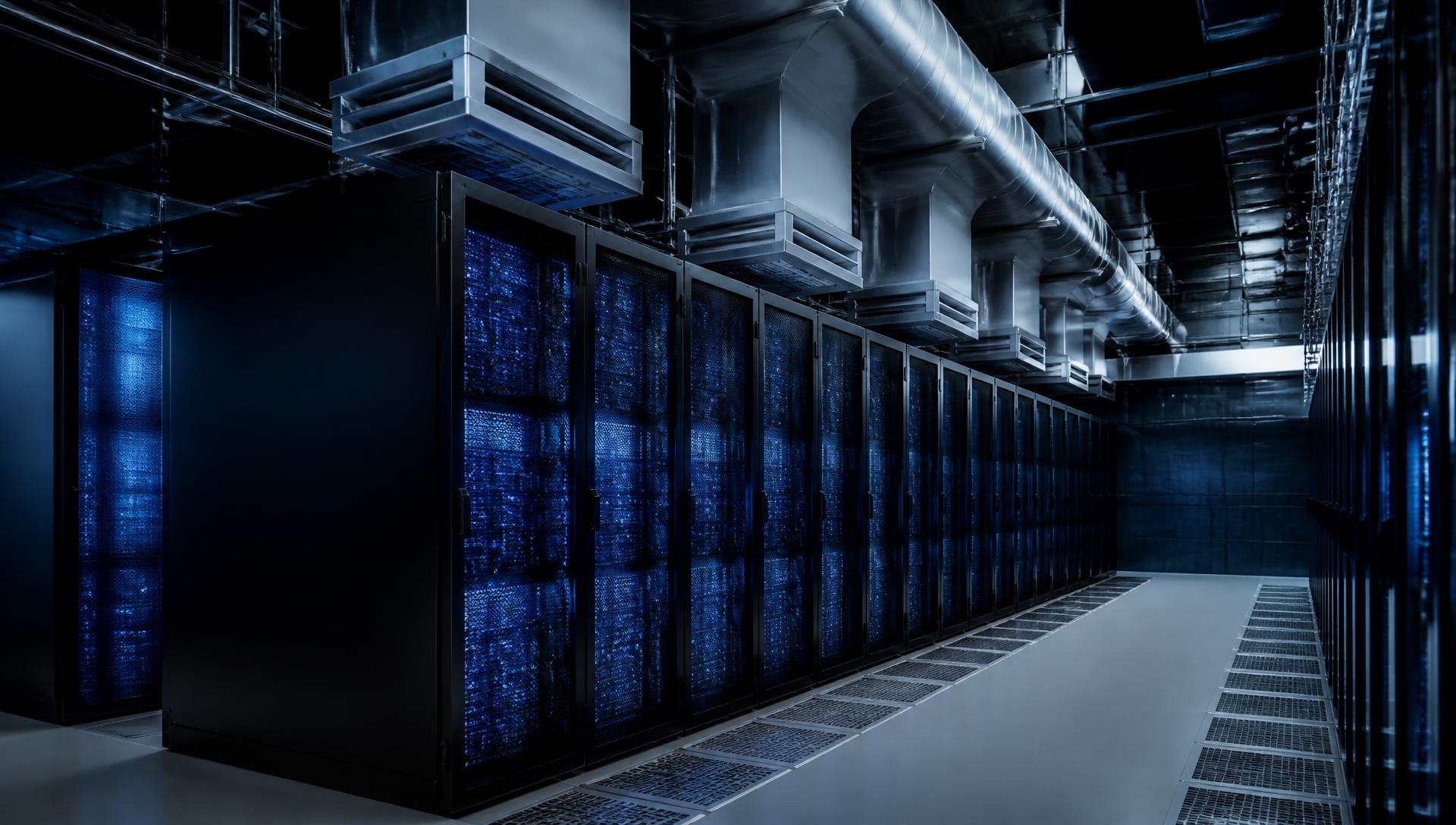
Data center server room with industrial HVAC cooling infrastructure

Commercial HVAC

Cooling for the systems
that cannot go down.

Server rooms, data centers, and telecom closets need precision cooling and fast response when temperatures rise. Ascend Services designs, maintains, and repairs critical environment HVAC across Upstate South Carolina.

Server Rooms & Data Centers

Precision cooling
for high-density loads.

General comfort HVAC is not built for the constant heat load and tight temperature tolerances of a server room. We evaluate the room as a system — equipment heat output, airflow paths, existing cooling capacity, and what happens when a unit fails.

  • Heat load calculations based on active equipment
  • Existing cooling capacity and airflow mapping
  • Hot spots and uneven temperature zones
  • Humidity control and condensation risk
  • Backup cooling and failover planning
  • Cable and airflow obstruction review
  • Computer Room Air Conditioner (CRAC) diagnostics
  • Computer Room Air Handler (CRAU) service and balancing
  • Refrigerant, glycol, and chilled-water system checks
  • Fan, filter, and coil maintenance
  • Control calibration and sensor verification
  • Redundant unit staging and load sharing

CRAC / CRAU Units

Service for precision
cooling equipment.

CRAC and CRAU units are purpose-built for constant operation and tight environmental control. Our technicians service the refrigeration, airflow, controls, and redundancy logic that keep these units running through peak load and failure scenarios.

Redundant Cooling

Built to fail
without failing you.

Redundancy is not just having a second unit. It is staging, controls, monitoring, and a response plan that activates before temperature becomes a problem. We help you plan, test, and maintain the cooling infrastructure your uptime depends on.

  • N+1 redundant cooling design review
  • Hot aisle / cold aisle containment strategy
  • Emergency portable cooling coordination
  • UPS and generator integration considerations
  • Temperature monitoring and alerting setup
  • After-hours escalation and response protocol

Critical environment capabilities

What we support.

Server room cooling

Data center HVAC

CRAC / CRAU units

Hot / cold aisle design

Redundant cooling systems

24/7 emergency response

Temperature monitoring

Preventive maintenance

Load planning support

How we'd approach it

Three scenarios, worked through.

These are not client case studies. They are common critical-environment problems and the way we would work each one — what we would measure, what we would rule out, and the outcome the approach is designed to produce.

Example scenario

12-rack server room, single split system

Upstate professional services firm

Rack-top temperatures spiked every afternoon and the room relied on one aging cooling unit with no backup.

Temperature swing
12°F → 3°F
Cooling redundancy
None → N+1
Unplanned shutdowns
Goal: none

Starting point

Peak intake temperatures drifted 12°F above target with no alerting until staff noticed heat.

Target outcome

The approach targets intake temperatures inside a 3°F band around setpoint, with alerts before any threshold is crossed.

What we ruled out

The obvious sale here was a larger replacement unit. Load calculation showed the existing system had adequate capacity — the failure was airflow distribution and zero redundancy, so the fix was a staged second unit and cold-aisle correction rather than throwing away working equipment.

  • Heat load calculation against actual rack draw
  • Airflow mapping and cold-aisle reconfiguration
  • Second staged unit added for N+1 coverage
  • Temperature sensors with alerting at rack level

Example scenario

Four CRAC units, chilled-water loop

Regional data center operator

Reactive repairs only. Two emergency calls in one quarter, both during business hours, both avoidable.

Emergency calls
Target: 2/quarter → 0
Cooling uptime
Target: 100%
Downtime avoided
Target: ~14 hrs/year

Starting point

Two emergency cooling failures per quarter and no visibility into equipment condition.

Target outcome

The program is built to catch failures during scheduled visits instead of after hours, driving emergency calls toward zero.

What we ruled out

Both emergency calls looked like control faults on paper. Trending the readings showed coil loading and drifting sensor calibration as the actual root cause, which meant a service interval change fixed it instead of a control system replacement.

  • Quarterly CRAC service with documented condition reports
  • Coil, filter, and fan replacement schedule by run hours
  • Control and sensor calibration on every visit
  • Escalation protocol with named after-hours contacts

Example scenario

Nine telecom closets across six buildings

Multi-site healthcare group

Closet cooling was inconsistent site to site, and a failure at one location took network services offline.

Monitoring coverage
9/9 sites
Detection time
Target: hours → minutes
Downtime avoided
Up to 4+ hrs per event

Starting point

One outage caused four hours of lost network service and an unbudgeted emergency repair.

Target outcome

The plan aims for monitored closets with a tested failover path, so a single closet failure never takes network services down.

What we ruled out

Nine closets could have been quoted as nine equipment upgrades. Assessment found six were adequately cooled and simply unmonitored, so the spend went to standardized monitoring and a tested failover plan, with equipment replaced only where the load genuinely exceeded capacity.

  • Standardized cooling spec across all nine closets
  • Portable emergency cooling staged and pre-tested
  • Remote temperature monitoring on a single dashboard
  • Documented failover steps for on-site staff

Request service

Send the details.

Include equipment type, room size, current cooling setup, and any temperature alarms or recent failures. We will confirm scope and scheduling.

After-hours and emergency service availability varies. Call to confirm current dispatch availability.

Critical environment service request

We call you back

A real person confirms the details and sets an arrival window.

We diagnose first

A technician finds the actual fault before anything is quoted.

You get written options

Clear pricing, repair vs. replace, and no pressure to decide on the spot.

A team member will confirm your request by the next business day.

Your information is used only for this service request.

No pressure, no obligation — just clear options and honest pricing.

FAQ

Questions, answered.

How fast can Ascend Services schedule critical environments?
Scheduling depends on current dispatch volume, and no-heat or no-cooling calls are prioritized. Call (864) 706-9322 or email office@ascendservices.io for same-day and next-day availability across Greenville County, SC and Spartanburg County, SC and Anderson County, SC and Pickens County, SC.
How much does critical environments cost?
Cost depends on the equipment, the fault, and the parts required. Our diagnostic visit is a flat $89 fee credited toward the approved repair. We present repair or replacement pricing in writing before any work starts, so there are no surprise charges.
What areas does Ascend Services cover for critical environments?
Ascend Services provides critical environments for businesses throughout Greenville County, SC and Spartanburg County, SC and Anderson County, SC and Pickens County, SC, including Greenville, Greer, Simpsonville, Mauldin, Travelers Rest, Fountain Inn, and surrounding communities.
Will you recommend replacement instead of critical environments?
Only when the numbers support it. We test the system first and recommend replacement only when equipment condition, repair history, and measured performance justify it. Otherwise we repair what you already own.
How do I request critical environments from Ascend Services?
Call (864) 706-9322, email office@ascendservices.io, or submit the request form on this page with photos of your equipment. You will receive confirmation with the appointment window and the technician assigned.
CallTextBook